What’s happened?
This week, Prime Minister Andy Burnham told the nation that national security “can’t come at the expense of social security”. The immediate issue is whether the UK will achieve 3% of GDP spending on defence by 2030, and, crucially, how that additional spending will be funded.
The welfare bill in the UK is ballooning, so funds are tight. In response to a challenge from opposition leader Kemi Badenoch, the Prime Minister said that he would bring welfare spending down in “the Labour way” by supporting young people and providing more mental health support.
What are we being told to think?
On one side, we have the argument that cuts to welfare are unacceptable. The answer, we are told, is to spend more on supporting people, particularly young people and those with mental health problems, so that they can eventually get into work, pay their way and reduce the welfare bill.
On the other side, we have more than 40 years of experience telling us that spending more on welfare means spending more overall. And if more money goes into welfare, there is less available for other aspects of government, such as national defence, unless we raise taxes or borrow more.
As always, those on both sides are shouting loudly enough to tell us that the other option is the worst one.
Hang on a minute…
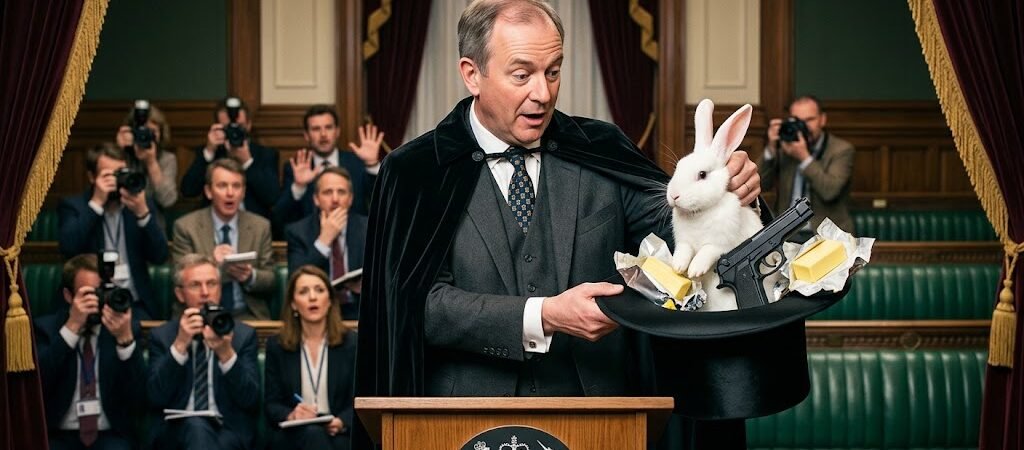
In economics, there is an old argument known as “guns versus butter” that has been around for more than a century.
The guns represent military spending and national security. The butter represents everything else: social welfare, schools, hospitals, parks and the like.
The point isn’t that governments literally have to choose between guns and butter. It is that governments have finite resources, and spending more on one thing inevitably means having less available for something else, unless taxes are increased or more money is borrowed.
This is nothing new. In the two world wars, it was almost a literal challenge as governments diverted enormous amounts of their economies towards the war effort.
In the last 40-plus years, the trade-off has been more nuanced but it still exists.
Former Defence Secretary, and current Chancellor of the Exchequer, John Healey said in his resignation from the defence post that former PM Sir Keir Starmer was “unable and the Treasury has been unwilling, to commit the resources that the nation needs to defend the country at this time of rising threats”.
John Healey now has a choice to make, and it is a difficult one. “Guns or butter”? Or perhaps he can think of a third option?
The reasonable position
Let’s look at the facts to determine what a reasonable person might think and the decisions they might make in John Healey’s shoes.
The size of the British army has declined from 153,000 regular soldiers to 73,790 between 1990 and today in 2026.
In 1990 the Royal Navy had 48 major combat ships. Today they have 13.
The RAF had over 300 combat jets in 1990. Today they have around 144.
That’s a clear and significant decline in overall numbers but there is an argument that the world faces different types of threats since the end of the Cold War, and technology has improved significantly to the point where sophisticated frigates and Eurofighter Typhoons are vastly more capable than their predecessors. So raw numbers don’t necessarily give the whole picture of the armed forces’ capabilities.
So let’s look at the figures in terms of spending instead. We’ll put pensions to one side and look at non-pensioner welfare. This is welfare spending on working age people. In the early 1980s non-pensioner social security spending was lower than defence spending. By 1990 both had fallen as a percentage of GDP, with non-pensioner welfare spending being very slightly above defence spending.
Today, non-pensioner welfare spending is around double that of defence. Add pensions back in and welfare dwarfs defence spending. In fact, the bill for interest on government borrowing alone is around twice what we spend on defending the nation.
So the relative spending is clear.
But what about welfare? Has it really increased that much?
That’s worth a whole article on its own but to give just one insight into it, let’s look at the number of working age people in the UK that claim benefits.
We have about 10 million working age people receiving some form of benefit, out of a total of about 43 million working age people. That’s nearly a quarter.
Around 7 million claim Universal Credit, while around 4.2 million claim health or disability-related benefits. Unemployment counts for about 1.6 million claimants. Many individuals claim multiple benefits simultaneously, hence the overlap in the figures.
Between 2019 and 2025, the number of working age adults between 16 and 64 receiving some kind of disability or incapacity benefit increased by well over 1 million, going from 1 in 13 adults to 1 in 10.
To put that into perspective, the working age population of Birmingham is around 771,000 and Manchester is around 391,000.
So the increase in people receiving disability and incapacity benefits in just six years is equivalent to the entire working age populations of two of our largest cities.
Why has this happened?
It is worthy of much more investigation. Indeed, a reasonable person, when confronted with that increase, might well ask why. Has the health of our working age population really deteriorated so much in just six years?
If so, why? If not, then what is really driving the increase?
The uncomfortable bit
What we’re being told by the Prime Minister doesn’t answer the question of why welfare spending has increased so much, so quickly.
Instead, we are being told that national security cannot come at the expense of social security, and that the welfare bill will be brought down in the “Labour way”.
But there is a problem.
If welfare spending will not be reduced significantly, and defence spending needs to increase, the money has to come from somewhere.
So what does this mean to you and me?
It means that John Healey needs to choose between performing an economic magic trick come the October Budget, raising taxes, cutting spending elsewhere, borrowing more, or changing the Prime Minister’s and Labour’s position on welfare.
If he can’t do any of those things, he has another choice to make: accept the constraints placed on him as Chancellor or resign again.
Economics doesn’t care which political party is in government. There are only so many ways to pay for something. The Prime Minister and the Chancellor need to agree on which one they’re going to use.
One last thing…
After PMQs, where the Prime Minister gave his views on social security versus national security, his team were at pains to point out that “national security is the most important duty of any government”. They also stressed that the Prime Minister had been “consistent about getting the welfare bill down”.
Based on what the Prime Minister actually said, do you believe that he thinks “national security is the most important duty of any government”?